Speakers 2026
Keynote Speaker I
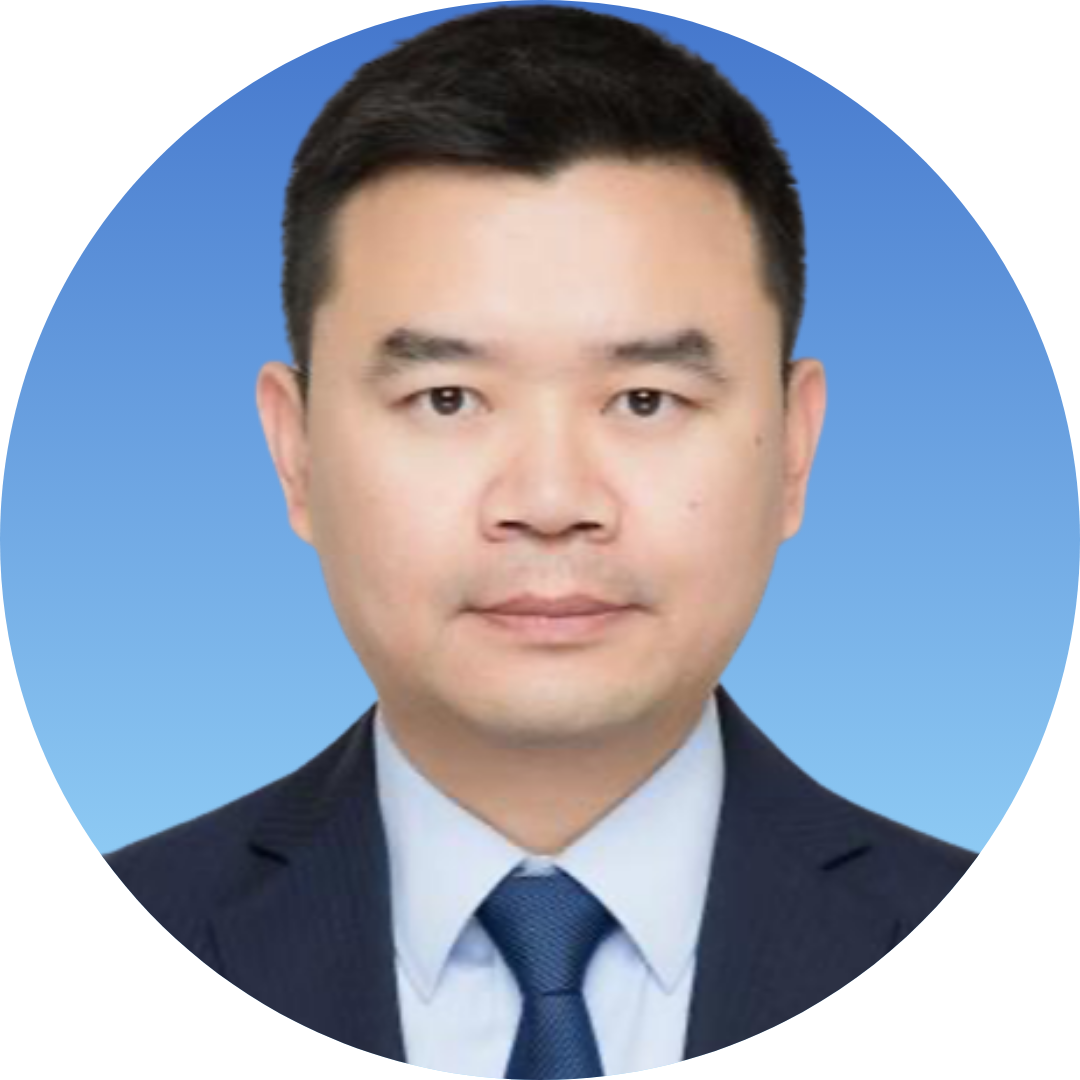
Prof. Bin Xiao
Chongqing University of Posts and Telecommunications
Bio: Bin Xiao is a Professor (Level II) and doctoral supervisor at Chongqing University of Posts and Telecommunications. He has been selected as a Changjiang Distinguished Professor and a Young Changjiang Scholar of the Ministry of Education. His research mainly focuses on multimodal image perception and security. He has led multiple projects, including Key Projects of the National Natural Science Foundation of China, international and regional cooperation projects, and National Defense Frontier Special Zone projects. He serves as an Associate Editor for journals such as IEEE TCSVT and Pattern Recognition Letters, and as a member of the Software Engineering Teaching Steering Committee of the Ministry of Education. He has published more than 200 papers in journals and conferences such as Nature Methods, Nature Photonics, IEEE TPAMI, and CVPR, and has been granted 15 Chinese national invention patents and 3 U.S. invention patents. His research achievements have received science and technology awards including the First Prize of the Wu Wenjun Artificial Intelligence Natural Science Award, the First Prize of the Wu Wenjun Artificial Intelligence Science and Technology Progress Award, the First Prize of the Chongqing Science and Technology Progress Award, the First Prize for Natural Science of the China Computer Federation (CCF), and other awards.
Speech Title: Generated Image Detection: Research and Practice
Abstract: With the disruptive advances in generative AI technology, malicious incidents triggered by generated images have occurred frequently and evolved into a major challenge in the field of global digital security. Current mainstream generated image detection algorithms generally suffer from bottlenecks such as limited detection accuracy, insufficient cross-domain generalization, a lack of multimodal processing mechanisms, and weak interpretability, making it difficult to meet the practical demands of large-scale deployment in real-world scenarios. This report mainly presents some of our team's reflections and work on improving image detection accuracy, multimodal collaborative detection, enhancing detection robustness, and model attribution.
Keynote Speaker II
 Prof. Zhihui Zhan
Nankai University, China
Bio: Zhi-Hui Zhan (Fellow, IEEE) is currently a Changjiang Scholar Young Professor and Gifted Professor with the College of Artificial Intelligence, Nankai University, Tianjin, China. His current research interests include evolutionary computation, swarm intelligence, and their applications in real-world problems.
Prof. Zhan was the recipient of the IEEE Computational Intelligence Society (CIS) Outstanding Early Career Award in 2021, the Outstanding Youth Science Foundation from National Natural Science Foundations of China (NSFC) in 2018, and the Wu Wen-Jun Artificial Intelligence Excellent Youth from the Chinese Association for Artificial Intelligence in 2017. He is listed as the Highly Cited Researcher by Clarivate Analytics, is listed as the World’s Top 2% Scientist for both Career-Long Impact and Year Impact in Artificial Intelligence, and is listed as the Elsevier Highly Cited Chinese Researcher in Computer Science from 2014 to 2025. He is currently an Associate Editor of the IEEE Transactions on Evolutionary Computation, the IEEE Transactions on Emerging Topics in Computational Intelligence, the IEEE Transactions on Artificial Intelligence, and the IEEE Transactions on Systems, Man and Cybernetics: Systems.
Speech Title: Knowledge Learning-Driven Evolutionary Optimization
Abstract: Learning and optimization are two key skills in human activity, and they are also two important ways through which artificial intelligence (AI) simulates human intelligence, giving rise to a series of learning and optimization algorithms. Evolutionary computation (EC) is a kind of powerful AI method for optimization. The EC simulates the evolutionary phenomenon and swarm intelligent behavior in nature, being promising in knowledge creation and problem solving. This talk will explore the synergy between learning algorithms and evolutionary algorithms in AI, focusing on how machine learning and knowledge acquisition can assist EC algorithms. This talk presents the Learning-aided Evolution for Optimization (LEO) and Knowledge Learning for Evolutionary Computation (KLEC). We hope such new EC paradigms can provide new ways for solving modern ultra-complex optimization problems and promote the new developments of EC and AI.
Keynote Speaker III

Prof. Pengfei Zhu
Southeast University, China
Bio: Pengfei Zhu is a Professor at the School of Automation, Southeast University, and Director of the Low-Altitude Intelligence Laboratory at the Xiong'an National Innovation Center. His research mainly focuses on intelligent unmanned aerial vehicles (UAVs). He established VisDrone, a large-scale open visual data platform for UAV research. He has published more than 100 papers in top-tier journals and conferences, including Computer Vision venues such as IEEE Transactions on Pattern Analysis and Machine Intelligence and International Journal of Computer Vision. He received the First Prize of the Wu Wenjun Artificial Intelligence Science and Technology Progress Award. He has also led more than ten major national research projects, including the "New Generation Artificial Intelligence" major project under China's Science and Technology Innovation 2030 initiative, as well as Key Program and Young Scientists projects funded by the National Natural Science Foundation of China (NSFC).
Speech Title: Low-Altitude Intelligence: From Perception and Reasoning to Collective Embodied Intelligence
Abstract: The low-altitude economy has emerged as a strategic pillar industry at the national level, while artificial intelligence is playing an increasingly important role in enabling its safe and efficient development. This talk discusses the development of low-altitude intelligence from four perspectives: low-altitude environment perception, reasoning and decision-making, embodied intelligence, and collective intelligence. It further introduces strategies for constructing low-altitude data platforms by discussing the relationship between data scale and model generalization in statistical machine learning, as well as scaling laws in the era of foundation models. Finally, the talk will present the team’s recent advances in low-altitude intelligence and showcase representative case studies in urban low-altitude governance.